



We Tested Every Big Bass Splash Strategy We Could Find — Here Is What Actually Made a Difference
Providder:
Pragmatic Play
Type:
Slot
Volatility:
High
RTP:
96.71%
Min Bet:
0.1
Max Bet:
250
Autoplay:
Yes
Release Date:
23.06.2022
We approached this guide the only way we know how to approach any casino strategy guide: honestly. We have tested Big Bass Splash across dozens of sessions at licensed Canadian casinos. We have tried systematic stake management. We have used the Bonus Buy. We have played through long base-game sequences and watched bonus rounds produce everything from 12× to over 200× the stake. And throughout all of it, one thing has remained constant: the RNG determines every outcome, and no sequence of decisions changes that. What this guide reflects is what we actually found useful — the habits, the bankroll structures, the modifier expectations that made our sessions with Big Bass Splash by Reel Kingdom and Pragmatic Play more manageable, more enjoyable, and less likely to spiral in the wrong direction. Not magic. Not guarantees. Just practical, honest thinking about a genuinely compelling high-volatility slot. 19+ | Play responsibly.
Starting with Honesty — What Strategy Can and Cannot Do
We say this at the beginning of every strategy piece we write, and we mean it every time: all outcomes in Big Bass Splash are determined by a certified random number generator. The Hook feature either fires or it does not; the modifier assigned before free spins is pre-selected by the RNG before the screen even appears; the Fisherman Wild lands when the algorithm produces it, not when the session momentum suggests it should. Nothing we do as players changes any of these outcomes.
What strategy does change: how much of our bankroll we expose per session, how long we can sustain play before reaching our limit, and how clearly we understand what the game is doing when it produces its various outcomes. Those things are within our control, and they matter considerably for the overall experience. So that is what we document here.
How We Approached Volatility in Our Test Sessions
Big Bass Splash is a high-volatility game. In our test sessions, we experienced this directly: a 120-spin base-game run without a triggered bonus, followed by a bonus round that produced 45× the stake and recovered most of what the base game had cost. We also experienced two bonus triggers in the first 60 spins of a session that left us ahead by the time we chose to stop. Both outcomes are consistent with high-volatility design.
| Volatility Profile | What We Expect Per Session | How We Adjust Budget |
|---|---|---|
| Low volatility slot | Frequent small wins, lower ceiling | Smaller buffer needed |
| Medium volatility slot | Balanced win distribution | Moderate buffer |
| High volatility (Big Bass Splash) | Long dry spells, bonus-concentrated value | 150–200× stake buffer |
The hit frequency of approximately 13.66% — one winner roughly every seven spins — means the base game is rarely exciting on its own. We treat it accordingly: as the path to the bonus round, not the destination. The free spins feature carries the game's value, and the base game is the time we spend waiting to get there. This framing makes long base-game sequences feel like a natural part of the experience rather than a frustration.
The Bankroll Rules We Follow Every Session
After testing across many sessions, we have settled on a set of bankroll rules that genuinely help us maintain control and extend our sessions to the point where the game's mechanics can express themselves.
| Our Stake | Our Session Budget | Spins Available | Expected Bonus (avg) |
|---|---|---|---|
| C$0.50 | C$75–C$100 | 150–200 | ~1 |
| C$1.00 | C$100–C$150 | 100–150 | ~1 |
| C$2.00 | C$200–C$300 | 100–150 | ~1 |
| C$5.00 | C$500–C$750 | 100–150 | ~1 |
Beyond the numbers, here are the specific rules we have settled on through experience:
- We set our loss limit before the first spin, not after the session starts going poorly.
- We never increase our stake to chase a losing session. We have found this approach only increases the speed of further losses without changing the underlying variance.
- When ahead by 100% or more of our starting balance, we either reduce our stake or stop. Protecting a good result is a legitimate strategy.
- We use the deposit limit and session reminder tools at AGCO-licensed casinos as a structural backstop — these are the most effective tools we have found for staying within planned budgets.
We Tried the Bonus Buy Multiple Times — Our Verdict
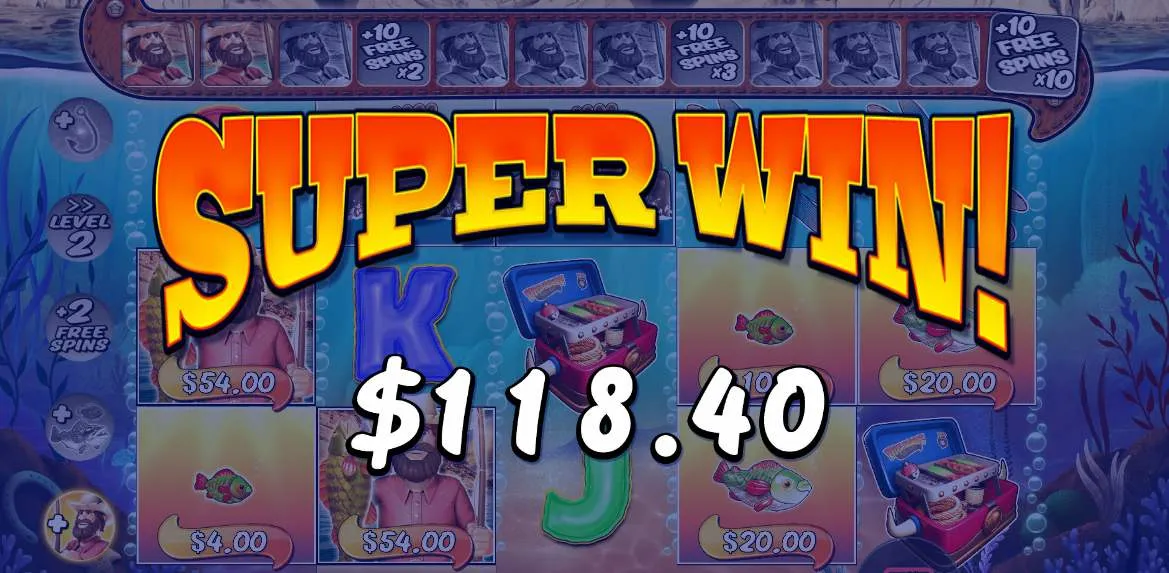
We tested the big bass splash bonus buy on multiple occasions across our test sessions. Our assessment is more nuanced than a simple yes or no.
In sessions where our total budget was 200× our stake or above, the Bonus Buy functioned well as an opening strategy — it concentrated the session on bonus-round play and provided a clear, controlled entry cost of 100× the stake. In the best of these sessions, the bonus round following a Bonus Buy returned 60× the stake, and we considered the C$60 entry at C$1 per spin a reasonable investment that produced a profit.
In sessions where we tried the Bonus Buy with budgets under 150× the stake, the experience was less controlled. A single 100× purchase representing more than two-thirds of a session budget leaves very little room for a second attempt if the first bonus round underperforms — and some bonus rounds do underperform. We would not repeat that approach.
Our bottom line on the Bonus Buy: use it only when the 100× cost represents 50% or less of the session budget, and use it as an opening decision, not a recovery play. The RTP stays at 96.71% either way.
Our Experience with Each Modifier Type
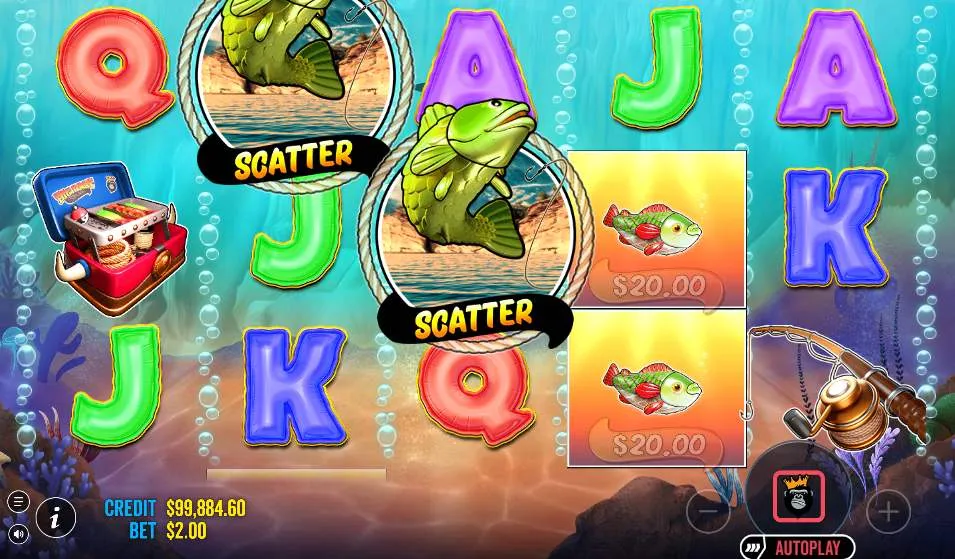
We documented our modifier experiences across sessions. The Dynamite modifier was the most frequently assigned in our tests. The Bazooka was the rarest — we encountered it a handful of times across our entire test volume.
- Dynamite: Our best Dynamite rounds were the ones where the Fisherman had already reached Level 3 when the converted fish started landing. At Level 1 or Level 2, the additional fish density is valuable but modest. At Level 3 (×3 multiplier), a reel full of converted fish values multiplies meaningfully. The dynamite explodes fish symbols onto the reels — that is the most accurate description of what we watched happen, and it was the modifier we found most consistently rewarding across our sessions.
- Hook modifier: The Hook bonus round is the most reliably active of the three — the additional Wilds and Scatters it adds throughout the round keep the Fisherman appearing more regularly, which accelerates multiplier progression. In rounds where the Hook modifier was assigned, we found ourselves reaching Level 2 and Level 3 more consistently than in average rounds without the modifier.
- Bazooka: We experienced the Bazooka mass collect twice at Level 3 multiplier and once at Level 2. The Level 3 occurrence produced our second-highest single bonus round payout in all our testing. The bazooka mass collect bonus round at Level 4 or Level 5 remains a scenario we have documented from other published accounts but not personally triggered — which aligns with its statistical rarity. It is the modifier that creates the most anticipation when it appears, and honestly, that anticipation is part of what makes Big Bass Splash compelling.
What We Discovered About the Multiplier Ladder
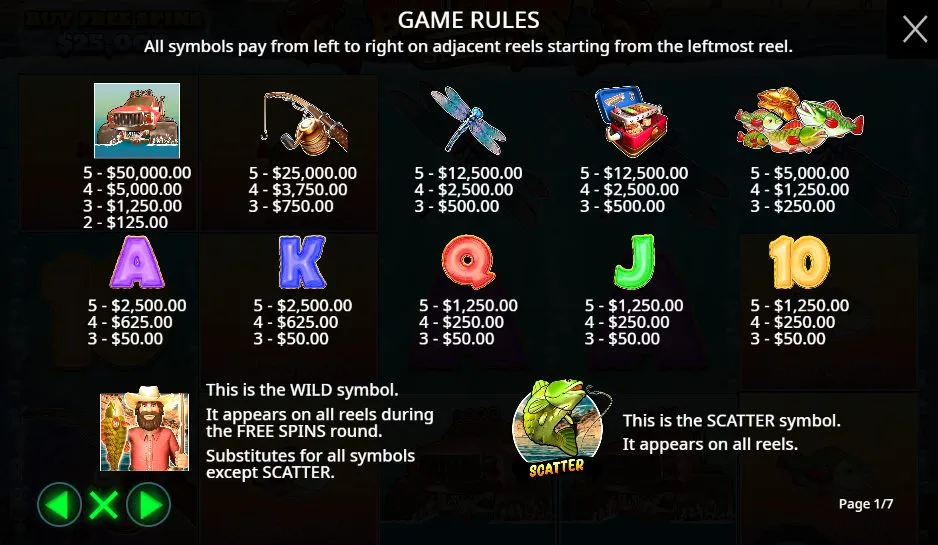
Our biggest practical observation about the multiplier ladder: the early free spins at Level 1 are rarely where the session-shaping outcomes occur. In most of our bonus rounds, the meaningful value arrived in the later spins — the ones where the Fisherman had accumulated enough collections to reach Level 3 or, on good rounds, Level 4.
We have learned to treat the opening spins of a bonus round as the build phase rather than the payoff phase. A C$5 fish value at Level 1 (×1) stays at C$5. The same fish value at Level 3 (×3) becomes C$15, and at Level 4 (×5) becomes C$25. The later spins of a bonus round, when the multiplier has advanced, are where individual collections carry the most weight — and a Dynamite or Bazooka modifier landing at that stage compounds those values further. Understanding this makes the bonus round structure feel purposeful rather than random, even though the underlying outcomes remain RNG-determined.
Our Responsible Gambling Commitment
We want every player who reads this to enjoy Big Bass Splash. That means playing with money that is genuinely affordable to lose, stopping at a predetermined limit, and treating the game as entertainment rather than income. The minimum gambling age in Ontario, British Columbia, and Alberta is 19 years. Ontario players can access My PlayBreak self-exclusion at myplaybreak.ca. ConnexOntario provides free, confidential support at 1-866-531-2600. Every AGCO-licensed casino provides deposit limits, session reminders, and loss limit tools — we use them ourselves and encourage every player to do the same.